
Washington County Release Date Types
Several dates can appear in one Oklahoma record, and they must not be merged. A projected release date, often shortened to PRD, is an administrative planning estimate. A parole eligibility date, or PE DATE, marks when a person may be considered for parole. Board Action records what the Oklahoma Pardon and Parole Board decided or recommended. The actual release or final discharge date records what was implemented. Each answers a different question.
A Washington County pretrial detainee usually lacks a computed release date. The person may leave after bond is posted and processed, a judge orders release, charges are dismissed, or another legal change occurs. Another hold can prevent departure. By contrast, a sentenced ODOC prisoner has days remaining that are adjusted through sentence administration. A person serving a short county sentence follows the county jail and court record, not ODOC’s state-prison credit table.
| Date or entry | What it answers | What it does not prove |
|---|---|---|
| PE DATE | When parole consideration may begin | Approval or physical release |
| PRD | Estimated sentence timing under current assumptions | Final exit date |
| Board Action | PPB decision or recommendation | Implementation by ODOC or the Governor |
| Actual release/discharge | What the custodian implemented | That all later supervision ended, unless the record says discharge |
Lookup Washington County Release Dates
Choose the search route by custody type. The Washington County Sheriff’s inmate search is current-only and has no future release-date field. It can confirm that someone is reported in the county jail now, but absence is not proof of release. For a county sentence, call the Washington County Correctional Facility at 918-332-4011, examine the court case, and request the jail’s custody-event or discharge record. For an ODOC sentence, use the state offender gateway and official sentence records.
- Identify whether the person is a pretrial county detainee, county-sentenced inmate, or ODOC prisoner.
- Check the official WCSO current inmate search for present county custody.
- Search the ODOC offender lookup only when the person entered the state system.
- Match the full name, ODOC number, Washington County case, offense, and sentence details.
- Read PRD, parole, probation, incarceration, and discharge as separate labels.
- Compare the Washington County OSCN docket for orders, sentencing, credit, or holds.
- Request the final custody or discharge record when the exact implemented date matters.
ODOC’s public materials need careful wording. Department policy contemplates public offender information that includes an offense, PRD, and photo, and PPB docket files publish a PRD column. Yet ODOC’s current FAQ describes a person’s exact future release date as tentative and confidential absent an accepted need. A profile or docket may show a PRD, but no ordinary search should promise access to the department’s full internal calculation.
The Washington County released-inmate search provides the full fallback when a person leaves the current county roster. It combines VINE, the jail register, court entries, and ODOC only when state custody or supervision is involved.
Washington County ODOC Date Search
The ODOC lookup serves a different group from the Washington County jail page. It is useful when a county case led to state incarceration, parole, probation, GPS, or another corrections status. It is not a statewide history of every person who posted bond, finished a county term, or had charges dismissed. If the person never entered ODOC, the absence of a state profile is expected.
Use the official ODOC Offender Information gateway, accept the disclaimer, and search by name or known department number. Compare identity and case details. The state warned during research that the direct lookup had moved to a new data source and was experiencing unanticipated issues, so missing or inconsistent data needs a second channel. A court judgment and final ODOC disposition are more durable than an abbreviated public profile.
| Search or result item | How to use it | Limit |
|---|---|---|
| Name or ODOC number | Starts the person-specific search | A name alone can match the wrong person |
| County and case | Connects the record to Washington County | Public details may be abbreviated |
| Custody or supervision status | Separates prison, parole, probation, and completed jurisdiction | Status can need agency clarification |
| PRD, when published | Shows the current planning estimate | Tentative, not an actual exit guarantee |
| Final disposition | Documents implemented release or discharge | May require an ODOC records request |
The state’s discharge-date explanation and tentative-date warning appear on the official ODOC information page captured below.
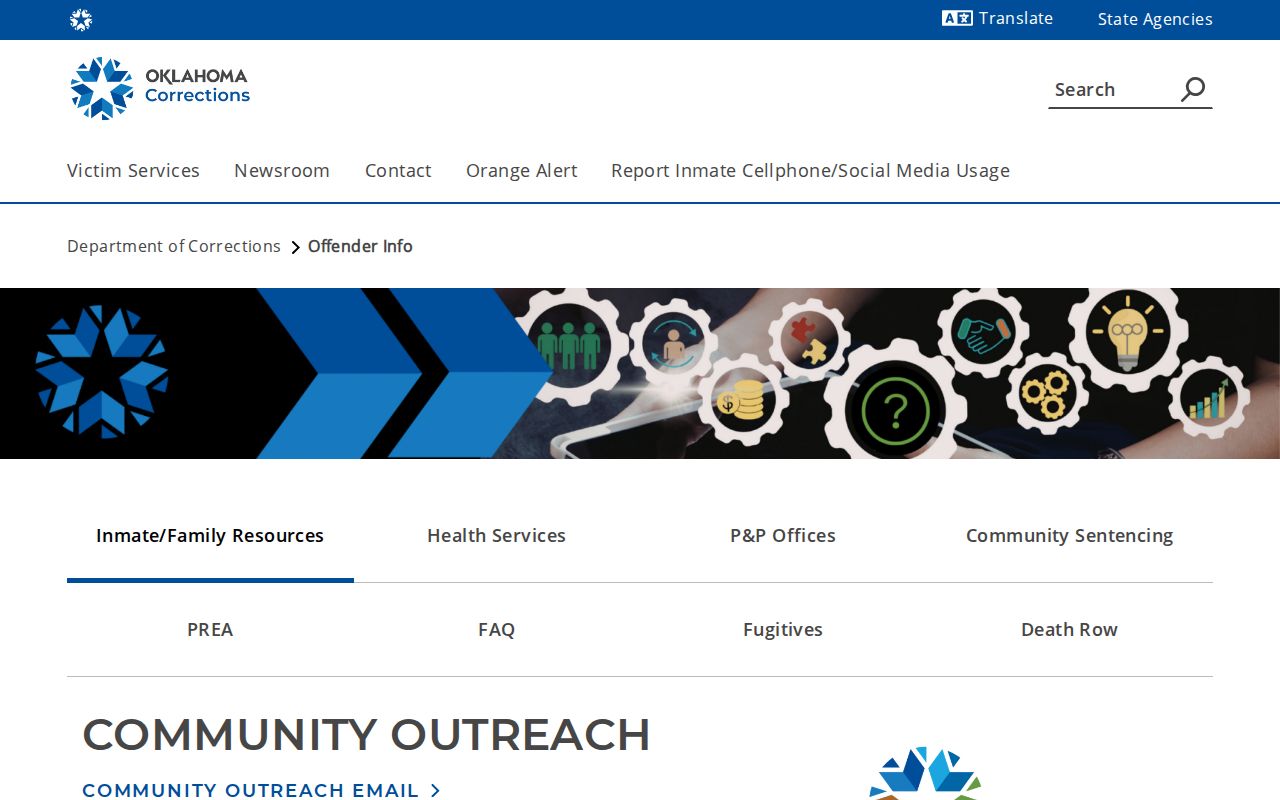
The captured wording supports using a PRD as a clue while reserving final confirmation for the implemented ODOC record.
Note: ODOC status is relevant only when the Washington County case entered state incarceration or community supervision.
Washington County Earned-Time Rules
For an ODOC sentence, the Manager of Sentence Administration, Offender Records and Registries is the department’s final authority on time calculation, sentence interpretation, and release dates. Days remaining change with actual days served and credits earned or lost. The sentence completes when that balance reaches zero. In general, the law in effect on the offense date governs, so today’s summary cannot be applied blindly to an older Washington County case.
Oklahoma Title 57, §138 governs earned credits. ODOC policy states ordinary monthly rates of zero days at Level 1, 22 at Level 2, 33 at Level 3, 44 at Level 4, 45 at Enhanced Level 3, and 60 at Enhanced Level 4. Enhanced levels are not available to people with the disqualifying felony histories in §138(E). Classification is reviewed at least every four months and considers conduct, participation, adjustment, and related factors.
Lost credits may be considered for restoration under §138(C), but restoration is not guaranteed. Achievement awards can add credit, and misconduct can remove it. These changes move days remaining and thus the planning date. A willing incarcerated person may receive a monthly days-remaining figure and work with facility records staff or a case manager, but that private communication does not turn a tentative number into a fixed public promise.
Oklahoma Title 21, §13.1 adds the 85% minimum-confinement restriction for listed offenses. Credits can accumulate during the first 85%, but they cannot reduce physical confinement below that statutory floor. Effective November 1, 2025, attempt, conspiracy, or solicitation of a listed offense also falls under the restriction. Older attempt cases require offense-date analysis. The statutory list can change, so the judgment, offense date, current law, and official calculation control.
Note: Earned credits affect ODOC sentence administration, but they are not a safe do-it-yourself release-date calculator.
Why Washington County Dates Change
A projected date moves because it is built from facts that can move. Conduct can change a credit class. Misconduct can remove credits, while approved achievements may add them. A new sentence, a corrected sequence, a court modification, a detainer, an ICE action, or a successful post-conviction ruling can change the time computation or the place a person goes next. Parole adds a separate decision path.
| Factor | Possible effect | Best confirming source |
|---|---|---|
| Credit class or achievement | May reduce days remaining | ODOC Sentence Administration |
| Misconduct or lost credits | May lengthen the estimate | ODOC calculation and disciplinary record |
| Detainer or hold | May send the person to another custodian | Holding and receiving agencies |
| Court order or new sentence | May alter term, credit, or sentence sequence | Washington County court record and ODOC |
| Parole action | May allow conditional release or cause a later review | PPB result, Governor when required, and ODOC implementation |
| Final audit correction | May rebill or correct the calculation | ODOC final disposition |
ODOC audits sentence records 365 days before discharge and again about 30 to 60 days beforehand. Its weekly Notice of Inmate Status Change can include discharges, paroles, rebills, new sentences, detainers, ICE releases, corrected calculations, reversals, commutations, and other events. That breadth explains why a saved screenshot can become stale even when it was accurate on the day it was made.
Parole eligibility is not a release date. For a nonviolent offense, the Board can grant parole. For a violent offense, a favorable vote is a recommendation and the Governor makes the final grant. A published “Parole To Detainer” result can move the person to another authority rather than into the community. Confirm the final Board result after adjournment, any required gubernatorial action, and ODOC implementation.
Oklahoma PRD Planning Multipliers
Oklahoma offers an unusually clear view of why “projected” cannot mean “fixed.” ODOC OP-060211 publishes PRD planning multipliers: .58 for Level 2, .48 for Level 3, .41 for Level 4, .40 for Enhanced Level 3, .34 for Enhanced Level 4, .50 for Ekstrand E5, .30 for E6, and .25 for E7. These numbers are administrative planning tools applied within the department’s full record. They are not a public calculator.
The same policy warns that a projected release date does not control actual discharge or a sentence rebill. Final discharge uses actual days served and credits through the last month. The 85% rule can also prevent credits from cutting confinement below the statutory floor. Thus, a Washington County PRD can be mathematically precise as an estimate while remaining legally and operationally tentative.
This distinction is visible in PPB result tables that place PE DATE, PRD, and Board Action beside each other. Three columns do not create one event. Eligibility opens the door to review, the PRD estimates sentence timing, and Board Action records a decision. A fourth source must supply actual release. Use ODOC’s implemented status, VINE’s custody event, or the final disposition history.
Washington County Jail Release Timing
No Washington County publication reviewed supplies a local jail good-time formula. ODOC’s state-prison credit levels must not be used to estimate a county-jail date. A county sentence may involve jail-time credit, concurrent or consecutive terms, a court modification, another agency’s hold, and release processing. The court and jail own those facts.
For a person held before trial, ask what event could authorize release instead of asking for a sentence calculation that does not exist. Bond may be posted, a judge may enter an order, or the case may change. Even then, a second warrant or detainer can prevent departure. The WCSO current roster reports custody, while the court docket reports legal actions. Neither is a substitute for the discharge entry.
Request the jail register or custody-event history from the WCSO Records Division. Identify the full name, date of birth or other identity detail, booking or case number, and approximate dates. Ask for the date and manner of discharge, booking sheet, and release type if kept. Under Oklahoma’s Open Records Act, 51 O.S. §24A.8, listed jail-register information includes the date or manner of discharge or escape when the agency keeps it. The law does not require the sheriff to create a new calculation.
Confirm Washington County Release Dates
Final confirmation follows the source. For county custody, use WCSO records and the Washington County court order. For state custody, use ODOC’s final disposition or discharge record. Closed Records and Discharges can be reached at 405-425-2691 or osordischarges@doc.ok.gov. Authorized victims seeking state release information may contact ODOC Victim Services at 405-425-2607 or victim.services@doc.ok.gov.
OK VINE can provide a pending custody-change alert, but it does not replace either record. Register through the Washington County VINE inmate check while the correct person is reported in custody. If an alert says transfer, locate the receiving system. If it says release, compare the event with the jail or ODOC record. VINE does not provide parole notice, which follows PPB’s separate victim process.
A sound answer names the date and its type. Say “projected” when the source says PRD, “eligible” when it says PE DATE, and “Board action” when it records a hearing result. Reserve “released” or “discharged” for the implemented custody record. That wording protects the difference between an estimate, a legal opportunity, an agency decision, and the event that actually occurred.
Note: The most reliable date is the final date recorded by the agency that implemented the Washington County or ODOC release.